
By Brian Hradsky
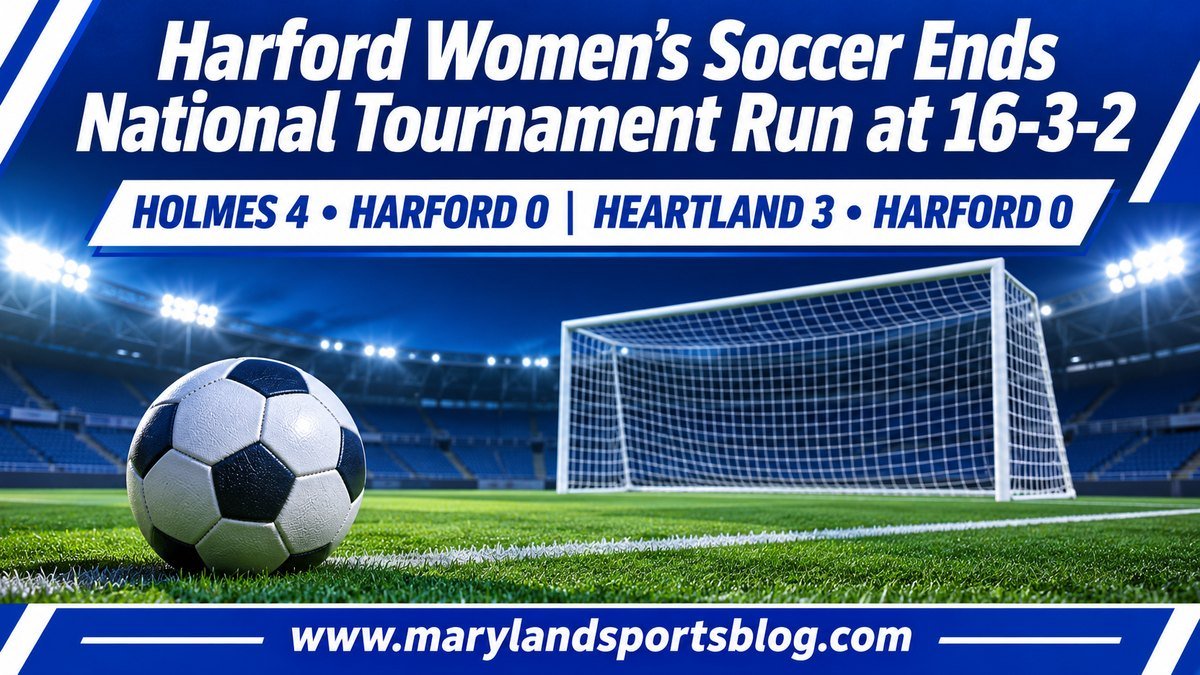
Harford Community College lost 3-0 to Heartland Community College on Nov. 16 after a 4-0 loss to Holmes Community College on Nov. 15, finishing its NJCAA Division II women’s soccer national tournament pool games at 0-2. The Fighting Owls’ official schedule lists a final overall record of 16-3-2. Both matches took place during the national championship event in Huntsville, Alabama. The results close a season that included Region 20 and East District championships and the program’s first national tournament appearance since 2017.
The national games supplied a difficult finish to an otherwise successful fall. Harford entered the tournament at 16-1-2 after shutting out Sussex County Community College in the East District final. Against Holmes and Heartland, the Fighting Owls faced opponents that generated substantially more shots and kept Harford off the scoreboard. The box scores give a clear account of that difference without diminishing the postseason wins that put Harford in the field.
Heartland scores twice before halftime
The official Heartland box score lists goals by Jasmin Geronimo at 21:48 and Lucia Calper at 38:31. Those finishes gave Heartland a 2-0 halftime lead and required Harford to chase the game after the break. Ava LaFollette added the third goal at 60:02 with an assist from Rebeccah Hoey. Heartland finished with a 23-9 advantage in shots and a 16-3 edge in shots on goal.
Harford used two goalkeepers against Heartland. Olivia Wollschlager played the first half and made eight saves, while Alyssa Dunnigan played the second and stopped five shots. Ami Walters put two attempts on goal for the Fighting Owls, and Maribella Sanchez added the other shot on target. Heartland’s goalkeepers stopped all three as Harford completed its second national tournament match without a goal.
Holmes creates sustained pressure in the opener
The official Holmes box score records goals from Kayla Jones at 18:54 and Avery Lofton at 43:08. Kat Diaz scored at 75:05, and Rylee Kirkland added the fourth at 86:37. Holmes led 2-0 at halftime and finished with 36 shots to Harford’s four. Wollschlager played the full 90 minutes and made 17 saves against 21 shots on target.
Sydney McLaughlin recorded Harford’s only shot on goal against Holmes. Hailey Cain attempted two shots, while Annabelle Lathroum supplied the other attempt in the Fighting Owls’ four-shot total. Those figures show how often Harford had to defend and how rarely it generated a chance that required a save. They also explain why the result needs to be assessed as a demanding team matchup rather than through the goals allowed alone.
A championship route built on clean sheets
The Fighting Owls’ official schedule provides the wider season context. Harford defeated Carroll Community College 1-0 in the Region 20 quarterfinals, Anne Arundel Community College 1-0 in the semifinals and CCBC Essex 2-0 in the championship. The Fighting Owls then beat Sussex 3-0 in the East District final. Those four postseason wins came without a goal conceded and secured Harford’s place at nationals.
The sequence matters because Harford’s tournament appearance followed an earned qualification path. Close regional games required the Fighting Owls to protect one-goal leads before they created more separation in the later rounds. The national results exposed a different level of pressure, but they did not replace the regional championship with a different outcome. Harford still completed a title-winning run before traveling to Alabama.
Forest and Wollschlager helped deliver the national berth
The official East District championship box score credits Macy Forest with two goals against Sussex. Lila Vincenti assisted the opening goal, and Hailey Cain assisted Grace Manager’s later finish. Wollschlager made six saves as Harford won 3-0 on the road in Newton, New Jersey. That result gave the Fighting Owls the championship and their return to the national tournament.
The district performance also offers a useful contrast with the final weekend. Harford converted its opportunities against Sussex while protecting its own goal, then encountered national opponents that sharply limited its chances. Both parts belong in a season review. Describing the national losses alone would miss the accomplishment of reaching the event, while ignoring them would leave the final record unexplained.
Maryland Sports Blog Take
Harford’s national finish should be reported plainly: two losses, no goals scored and a 16-3-2 overall record. The shot totals show that Holmes and Heartland consistently created more attacking pressure in those games. At the same time, the Fighting Owls’ regional and district titles provide concrete achievements rather than a consolation narrative. Their season included both championship success and a difficult national test.
The goalkeeper workloads are especially important when reading the final scores. A four-goal result can look very different when the box score also records 17 saves, just as the Heartland game required 13 combined stops from Wollschlager and Dunnigan. Those numbers do not change either defeat. They do add necessary detail about the amount of pressure Harford faced.
MSB’s East District championship story covers the win that secured the national berth. Our Region 20 title report explains the earlier championship, and the regional semifinal recap follows another step in the run. This national tournament wrap-up supplies the new ending to that coverage. Harford’s 2026 season now has a complete postseason record from regional elimination games through its final match in Huntsville.