
Jim Palmer Says Craig Albernaz Ignored His Advice, Adding Another Problem to Difficult First Season
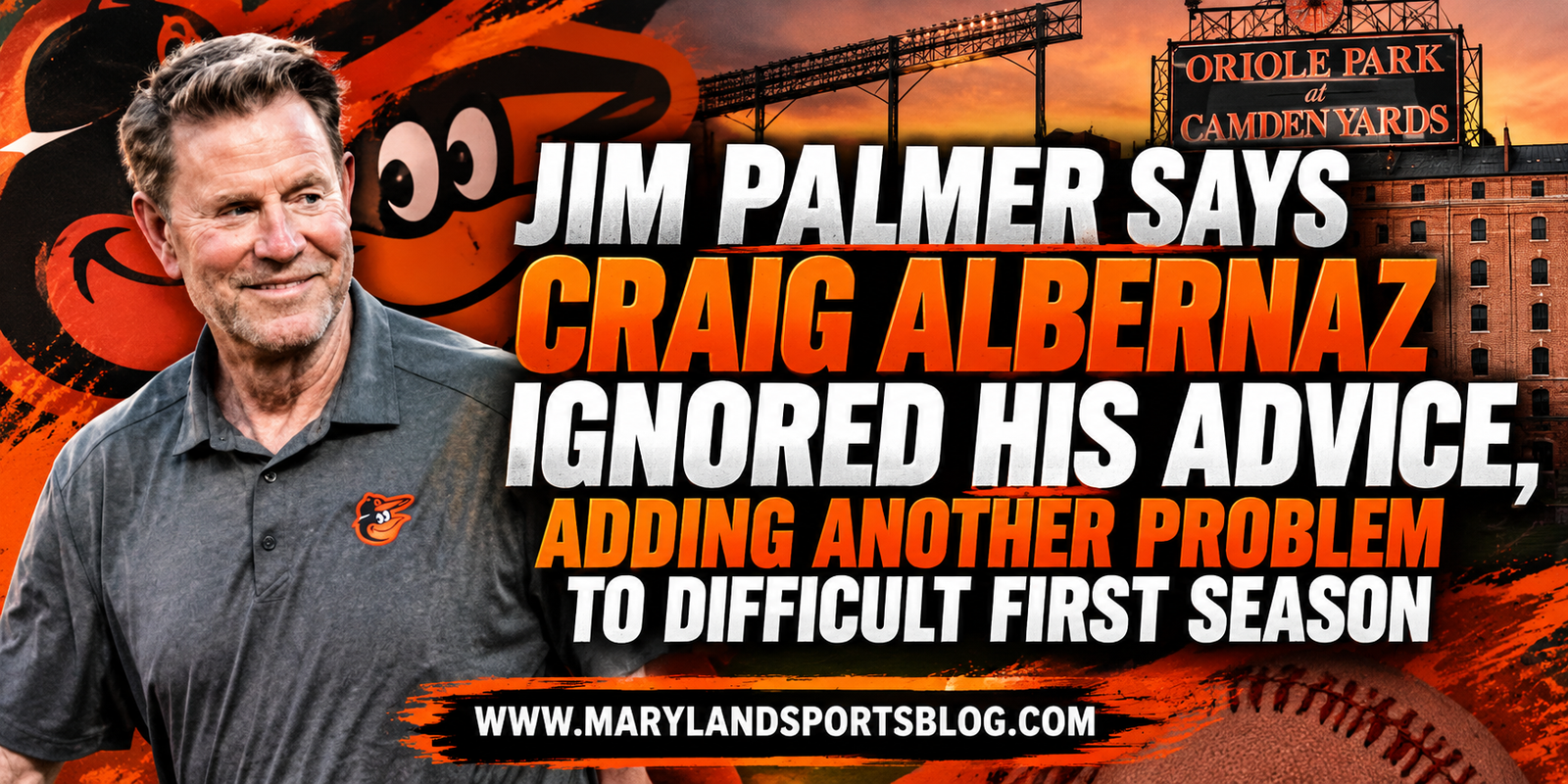
Craig Albernaz already had plenty of work to do to win over Baltimore Orioles fans after a disappointing first season as manager. A story told by Orioles legend Jim Palmer is unlikely to make that task any easier.
Palmer revealed during an appearance on the Bmore Sports Podcast that he reached out to Albernaz before spring training with an idea designed to help outfielder Colton Cowser. According to Palmer, Albernaz never responded to the message, and when Palmer eventually brought it up months later, the manager’s response did not exactly sound receptive.
That is significant because this was not simply advice coming from a random former player. Palmer is a first-ballot Hall of Famer, a three-time Cy Young Award winner, a three-time World Series champion and one of the most accomplished players in Orioles history. He has remained around the organization for decades as a broadcaster and has watched generations of Orioles players develop.
Albernaz certainly does not have to follow every suggestion Palmer makes. No manager should run a baseball team based on instructions from former players, broadcasters or fans. However, Palmer’s account raises a different question: Why would a first-year manager not at least listen to what one of the most knowledgeable people in franchise history had to say?
Palmer wanted Cowser to study Cody Bellinger
Palmer’s suggestion centered on one of Cowser’s biggest weaknesses.
Palmer told the podcast that he sent Albernaz a text in February suggesting Cowser spend part of spring training studying Cody Bellinger’s at-bats, particularly against left-handed pitching. Palmer believed Cowser could benefit from examining Bellinger’s approach, including the counts he worked himself into and how his bat traveled through the hitting zone.
It was not an unreasonable suggestion.
Cowser entered the season as an important piece of Baltimore’s young core, but his ability to handle left-handed pitching remained a concern. Palmer apparently saw an established left-handed hitter in Bellinger whose approach could provide Cowser with something worth studying.
According to Palmer, he sent the suggestion to Albernaz in mid-February.
He never received a response.
Months passed before Palmer said he finally spoke with Albernaz about the message on the field before a game in Houston, with roughly five weeks remaining in the season. Palmer recalled Albernaz referring to the message as something from a long time ago before telling Palmer that talking about making an adjustment was easier than actually doing it.
Palmer responded by pointing toward his six decades of experience around the game.
“If you don’t talk about it, there’s no chance of doing it.”
That response gets directly to the problem.
The issue is not whether Palmer’s suggestion definitely would have fixed Cowser. Nobody can know that. The problem is that an Orioles legend with more than 60 years of experience around Major League Baseball apparently tried to offer a constructive idea to a rookie manager and, according to Palmer’s account, could not even get a response.
Cowser’s results make the story look worse
Had Cowser destroyed left-handed pitching this season, Palmer’s story might amount to little more than an interesting disagreement over hitting philosophy.
That did not happen.
Cowser finished the season hitting .226 with a .687 OPS, 13 home runs and 121 strikeouts in 392 plate appearances. According to the statistics cited in the report about Palmer’s comments, Cowser hit only .132 with a .406 OPS against left-handed pitching while striking out 27 times in 65 plate appearances.
Those numbers do not prove Palmer’s idea would have worked. Watching Bellinger’s video would not magically have transformed Cowser into a dominant hitter against lefties.
They do, however, demonstrate that Palmer correctly identified a legitimate problem.
That distinction matters.
Palmer was not criticizing something Cowser was already doing well. He identified an area that ultimately became a significant weakness during the season and apparently offered an idea months before the problem played out.
At the very least, it was worth a conversation.
Another communication question surrounding Albernaz
This story would probably receive less attention if Albernaz were coming off a successful first season.
He is not.
Baltimore finished 79-82 and missed the postseason for a second consecutive season. The Orioles entered 2026 expecting to return to contention after an aggressive offseason, but the improvements Albernaz was hired to help produce never consistently materialized.
Albernaz also acknowledged after the season that he failed to get the most out of his players.
Throughout the season, Albernaz faced criticism over fundamentals, lineup decisions and his handling of players. One of the most notable situations involved Samuel Basallo, when Albernaz publicly discussed the young catcher’s need to learn how to play through discomfort while Basallo offered a somewhat different perspective about his availability.
Palmer himself questioned that situation during a MASN broadcast. When Basallo was available to pinch hit but not starting, Palmer said he did not believe a losing streak was the appropriate time to teach a young player a lesson and noted that opposing pitchers should have been delighted not to see Basallo in Baltimore’s lineup.
Later in the season, Albernaz drew additional criticism after publicly calling out Jeremiah Jackson following a poor at-bat. BaltimoreBaseball.com’s Jack Gibbons argued that Albernaz went too far, particularly because similar public criticism had not always been directed toward the team’s more prominent players after their mistakes.
Individually, none of these moments necessarily defines a manager.
Collectively, they begin to form a pattern worth examining.
Orioles players identified deeper problems
Perhaps even more concerning were comments from inside the Orioles clubhouse following the season.
The Baltimore Banner interviewed 10 Orioles players about what went wrong in 2026. Veteran pitcher Chris Bassitt discussed players sometimes going through the motions during workouts rather than treating the work seriously enough to create improvement. He argued that successful organizations establish standards throughout the system instead of simply completing drills to check boxes.
Blaze Alexander also said the Orioles did not establish enough accountability early in the season when defensive mistakes occurred. Jackson Holliday acknowledged that Baltimore repeatedly found ways to lose games through errors and other fundamental mistakes.
Those comments are important when evaluating Albernaz because accountability, preparation and fundamental baseball were supposed to be among the improvements associated with his arrival.
Albernaz spoke early in the season about redefining Baltimore around fundamental baseball and doing the little things correctly. Yet many of the same problems remained months later.
That does not place every mistake at Albernaz’s feet. Major League Baseball players have responsibility for their own performance, and Pete Alonso specifically emphasized after the season that the players needed to perform better.
Still, the manager is responsible for establishing standards.
When a team consistently struggles with preparation, execution and fundamentals, the manager inevitably becomes part of that conversation.
Orioles fans were already frustrated
It would be difficult to characterize literally every Orioles fan as disliking Albernaz, but widespread frustration with the first-year manager is easy to document.
BaltimoreBaseball.com’s September mailbag noted receiving multiple critical questions about Albernaz from readers, including one fan who said he did not have the same confidence in Albernaz that he had in former managers Brandon Hyde and Buck Showalter.
Fans at Camden Yards also openly booed during Baltimore’s struggles this summer. Albernaz acknowledged their frustration, saying they had every right to boo while the Orioles were failing to meet expectations.
Reaction to Palmer’s latest story has been similarly harsh. Orioles fans discussing the interview online have largely focused not on whether Albernaz was obligated to follow Palmer’s advice, but on why he apparently did not acknowledge it or engage Palmer in a conversation. Some fans made the reasonable distinction that a manager can reject advice while still showing respect to the person offering it.
That is ultimately what makes this story damaging.
Albernaz did not have to agree with Palmer.
He did not have to implement Palmer’s suggestion.
He did not have to tell Cowser to spend his spring studying Bellinger.
But if Palmer’s account is accurate, simply responding and having a conversation with one of the greatest players in Orioles history seems like a very low bar.
Palmer’s voice carries weight in Baltimore
There are very few people whose opinions about Orioles baseball carry more historical weight than Palmer’s.
Palmer pitched his entire major league career with Baltimore. He played on six American League pennant winners and three World Series championship teams, won three Cy Young Awards and eventually entered the Baseball Hall of Fame.
More importantly for this discussion, Palmer has remained around the organization.
He watches the Orioles virtually every day during the season. He talks with players, coaches and baseball personnel. His broadcasting career has allowed him to observe decades of organizational philosophies, successful teams, losing teams and managerial changes.
That does not make Palmer automatically correct.
It does make him someone worth listening to.
A young manager should want knowledgeable people around him, particularly when taking over an organization with the history Baltimore possesses. Listening does not mean surrendering authority. It means collecting information and deciding whether it can help.
Albernaz could have listened to Palmer and decided his idea was wrong.
That would have been perfectly reasonable.
Ignoring him altogether is much harder to understand.
Albernaz will get another chance
Despite the disappointing season, Albernaz is expected back in 2027.
Orioles president of baseball operations Mike Elias said in September that Baltimore would continue building around Albernaz, confirming that the organization intends to give its manager another opportunity.
That makes this offseason extremely important.
Albernaz needs more than better results next season. He needs to establish confidence that the Orioles are becoming a disciplined, prepared and accountable baseball team.
The organization cannot spend another season talking about fundamentals while repeatedly failing to execute them.
It cannot preach communication while stories emerge about communication problems.
And Baltimore cannot afford another season in which its talented young hitters stagnate while the Orioles search for answers.
The Palmer story will eventually disappear from the daily news cycle. What will remain is the question it raises about Albernaz’s willingness to listen, communicate and adapt.
Those are qualities Baltimore desperately needs from its manager.
MSB Take
Jim Palmer’s suggestion might not have fixed Colton Cowser. That is not really the point.
The point is that a three-time Cy Young Award winner, Hall of Famer and Orioles legend with more than six decades around the organization apparently reached out to Baltimore’s rookie manager with an idea intended to help one of the team’s most important young players. According to Palmer, he received no response and later felt the suggestion was brushed aside.
That is a terrible look for Albernaz.
Orioles fans were already frustrated after watching a talented roster finish 79-82, miss the playoffs and repeatedly struggle with the fundamentals Albernaz was hired to improve. The criticism surrounding Basallo, the public comments about other players and the postseason revelations about preparation and accountability had already created legitimate questions about his first season.
Now one of the greatest Orioles of all time is publicly telling a story about trying to help and seemingly getting nowhere.
Albernaz does not have to manage the Orioles the way Jim Palmer wants him to manage them. He does not have to agree with Palmer’s hitting philosophy. He does not even have to believe Palmer’s suggestion was particularly useful.
But you listen.
You ask Palmer what he sees.
You have the conversation.
Then you make your own decision.
Albernaz is supposed to be building a winning culture in Baltimore. Part of building that culture should be taking advantage of the extraordinary baseball knowledge surrounding this franchise rather than appearing to dismiss it.
For a manager who desperately needs to win over a frustrated fan base in 2027, this story does him absolutely no favors.