
Dylan Strome Became the Engine Behind Washington’s Offense During the 2026 Season
The Washington Capitals entered the 2025-26 season facing enormous questions about the future of the franchise.
Alex Ovechkin continued chasing history while aging deeper into his legendary career. The roster underwent major transition throughout the season after the organization moved veteran defenseman John Carlson earlier in the year. Younger players needed to take larger offensive roles. Washington needed another reliable top-line center capable of carrying major minutes against elite competition every night.
Dylan Strome answered that challenge.
Consistency defined Strome’s season from opening night through the final weeks of the regular season. Offensive production, faceoff wins, power-play efficiency, and top-six leadership turned the veteran center into one of the most important players on Washington’s roster during 2026.
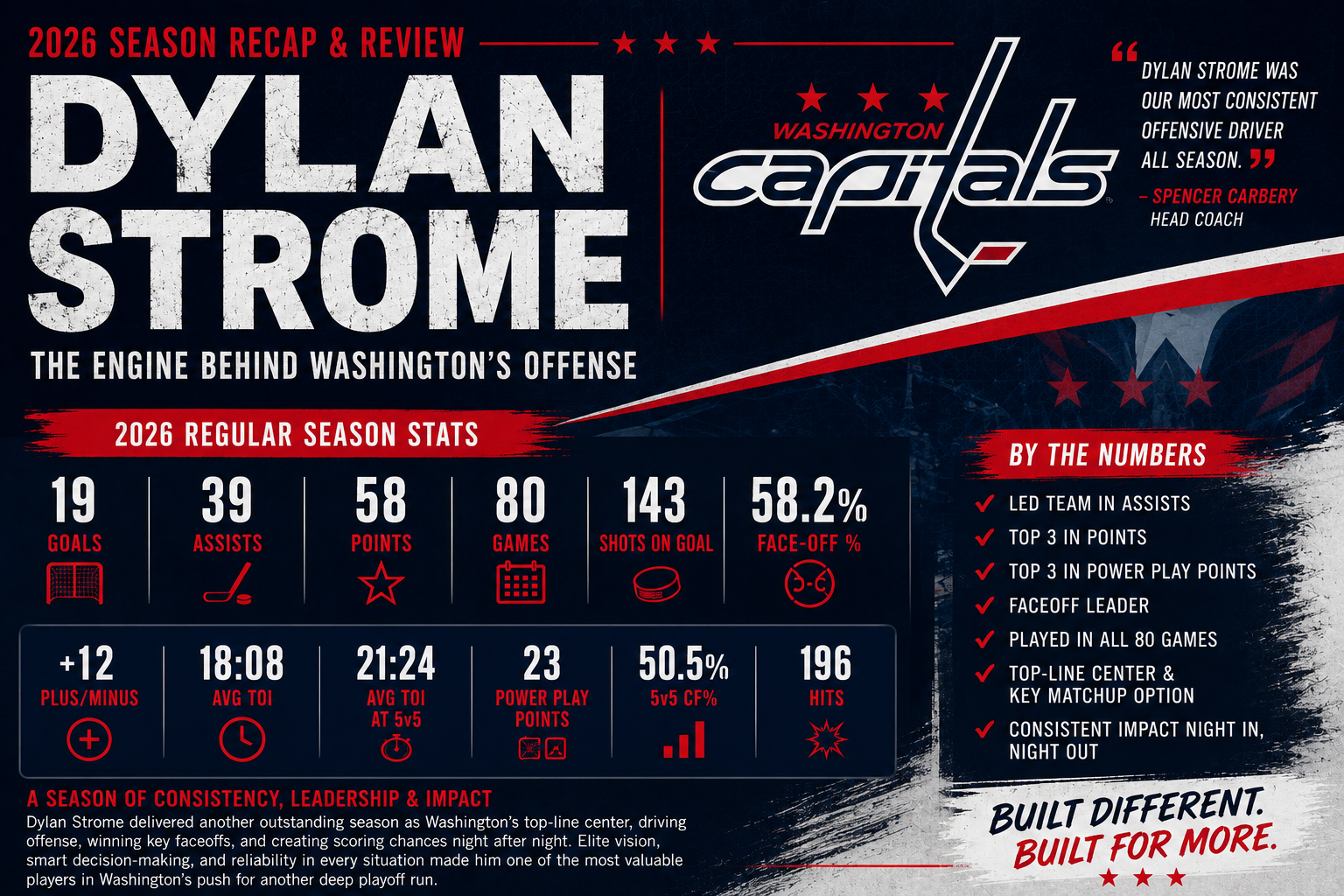
Strome finished the season with 19 goals, 39 assists, and 58 points across 80 games while averaging more than 18 minutes of ice time per night. The veteran center also posted a 58.2 percent faceoff percentage, delivered 143 shots on goal, and remained heavily involved on Washington’s top power-play unit throughout the season.
Production alone only tells part of the story.
Washington relied on Strome in nearly every critical offensive situation during the season. Top-line center responsibilities included defensive-zone draws, late-game puck possession shifts, matchup assignments against opposing first lines, and quarterbacking offensive zone puck movement alongside Ovechkin.
Strong chemistry between Strome and Ovechkin remained one of the defining themes of Washington’s offense again this year.
Excellent vision and passing touch allowed Strome to continue thriving as one of the NHL’s better playmaking centers. Cross-ice feeds, quick puck movement through traffic, and patience inside the offensive zone repeatedly created scoring opportunities for Washington’s top scorers.
Maryland hockey fans watched another strong Capitals season unfold while the regional sports scene remained packed with major storylines across multiple sports. Recent coverage from included stories surrounding the Capitals’ offseason changes, Orioles roster movement, and Ravens draft coverage.
Additional Capitals-related reading from Maryland Sports Blog includes:
Additional statistics and season breakdowns regarding Strome’s year appeared on:
Strong offensive numbers have followed Strome throughout much of his NHL career, but the 2026 season carried different importance for Washington. Leadership responsibilities increased dramatically as the roster evolved throughout the year.
Washington needed stability.
Strome delivered it.
Pressure surrounded the Capitals entering the season because the organization faced uncertainty regarding the long-term direction of the roster. Ovechkin still remained productive, but Washington clearly needed younger veterans to carry more of the offensive workload.
Strome embraced that responsibility immediately.
Excellent puck control and offensive awareness allowed Washington to maintain offensive structure even during difficult stretches. Defensive pressure rarely forced panic from Strome in transition. Smooth puck distribution through the neutral zone helped Washington generate cleaner offensive entries throughout the season.
Faceoff dominance also became one of the most overlooked parts of Strome’s year.
Winning 58.2 percent of faceoffs gave Washington major possession advantages throughout games. Offensive-zone draws frequently created immediate scoring opportunities, especially on the power play. Defensive-zone wins helped Washington escape pressure late in games.
Centers who consistently control possession through faceoff success often become invaluable to playoff-caliber teams.
Washington experienced that value throughout the year.
Durability also became another major positive.
Strome appeared in 80 games while logging heavy minutes against top competition nearly every night. Availability matters enormously during an 82-game NHL schedule, especially for top-six forwards responsible for power-play production and matchup assignments.
Washington never needed to wonder whether Strome would show up.
Night after night, production continued arriving steadily.
The season started strongly for Strome during October and November as Washington attempted to establish offensive rhythm early. Strong chemistry alongside Ovechkin and Washington’s top wingers immediately showed up on the scoresheet.
Primary assists piled up early.
Power-play production followed.
Possession metrics improved whenever Strome controlled shifts in the offensive zone.
Washington’s coaching staff leaned heavily on Strome because few players on the roster processed offensive spacing faster. Quick reads inside the neutral zone repeatedly created transition chances before opposing defenses settled into structure.
Elite hockey vision has always separated Strome from many centers around the league.
The former third overall pick entered the NHL carrying enormous expectations after dominant junior hockey seasons with Erie in the Ontario Hockey League. Early NHL struggles in Arizona created questions about long-term upside, but growth since arriving in Washington has changed the narrative surrounding Strome’s career completely.
Washington unlocked consistency.
Confidence followed.
Opportunity expanded.
The Capitals received one of the better value contracts in hockey because of Strome’s offensive production relative to cap hit. Washington repeatedly benefited from having a top-six center producing nearly 60 points without superstar-level salary limitations.
That value mattered even more during a season filled with roster adjustments and salary-cap challenges.
Strome also improved defensively during portions of the season.
Defensive-zone positioning looked sharper throughout 2026 compared with earlier stages of Strome’s career. Better stick placement disrupted passing lanes more consistently. Increased physical engagement helped Washington win puck battles along the boards.
Strong offensive centers often receive criticism regarding defensive play.
Strome reduced some of those concerns this year.
Physicality never defines Strome’s game, but stronger compete level along the walls and improved defensive awareness created more complete performances throughout the season. Washington needed that growth because the roster lacked dominant two-way depth after several veteran changes.
Washington also relied heavily on Strome during special teams situations.
Power-play responsibilities increased significantly throughout the season. Half-wall puck movement and quick passes through the slot helped create scoring opportunities for Ovechkin and Washington’s supporting scorers.
Few players on the Capitals roster processed passing angles faster than Strome.
Patience consistently stood out.
Rather than forcing difficult shots into traffic, Strome frequently slowed possessions long enough for offensive lanes to open naturally. Smart decision-making helped Washington maintain offensive-zone pressure during important stretches of games.
The numbers reflected that impact.
Strome finished among Washington’s offensive leaders in assists, power-play production, and offensive-zone possession metrics.
Several stretches during the season highlighted just how valuable Strome became to Washington’s offense.
One particularly strong run late in the season helped keep Washington competitive during a difficult playoff push. Multi-point games arrived frequently as Strome elevated offensive production against divisional opponents and playoff contenders.
Strong passing through the neutral zone repeatedly opened transition chances.
Excellent chemistry with Ovechkin remained obvious.
Washington’s offense looked significantly more dangerous whenever Strome controlled tempo through the middle of the ice.
Scoring balance also improved because opponents could no longer focus exclusively on Ovechkin.
That development became crucial for Washington.
Previous Capitals teams occasionally struggled whenever opposing defenses overloaded pressure toward Ovechkin’s shooting lanes. Strome’s playmaking ability punished teams for overcommitting defensively.
Washington desperately needed secondary offensive creators.
Strome became the primary answer.
Leadership inside the locker room also expanded throughout the year.
Veteran presence matters enormously during long NHL seasons filled with injuries, road trips, and losing streaks. Washington’s roster included younger players stepping into larger roles, making experienced leadership increasingly valuable.
Strome helped stabilize difficult stretches.
Calm demeanor and consistent effort rarely changed regardless of circumstances. Emotional overreactions never became part of Strome’s game. Washington benefitted from that composure during difficult road stretches and frustrating losses.
Coaches trust predictable players.
Washington clearly trusted Strome.
Ice-time usage reflected that trust throughout the season. Critical late-game shifts consistently featured Strome against opposing top players. Offensive-zone faceoffs late in close games often went directly toward Washington’s top center.
That workload says plenty.
Top-line NHL centers carry enormous responsibility physically and mentally. Matchup assignments alone can exhaust players over full seasons. Offensive expectations only add more pressure.
Strome handled everything effectively.
Washington’s offense also evolved throughout the year because roster movement forced lineup adjustments. Injuries and trades repeatedly changed line combinations, yet Strome consistently produced regardless of surrounding personnel.
Adaptability became another major strength.
Some centers only thrive beside elite wingers.
Strome produced offense with multiple combinations throughout the season.
That versatility allowed Washington’s coaching staff more flexibility during lineup experimentation. Power-play adjustments also became easier because Strome could comfortably distribute from different offensive positions.
The statistical production remained impressive even compared with several top Eastern Conference centers.
Fifty-eight points across 80 games may not place Strome among NHL scoring leaders, but context matters heavily when evaluating Washington’s roster structure. Defensive attention surrounding Ovechkin, lineup instability, and roster turnover placed enormous pressure on Washington’s top offensive players.
Strome consistently answered that challenge.
Shot generation also improved throughout portions of the season.
Aggressive puck attacks inside the offensive zone created more scoring opportunities than earlier years in Washington. Increased willingness to shoot prevented opposing defenses from simply overplaying passing lanes.
Balanced offensive threats make top centers harder to defend.
Strome became noticeably more dangerous whenever defenders respected shooting ability alongside passing vision.
The Capitals also benefited from Strome’s durability and conditioning.
Heavy minute totals rarely impacted late-game energy levels. Pace remained strong during third periods throughout much of the season. Washington needed that endurance because the roster lacked elite center depth behind Strome during stretches.
Availability and consistency often separate good players from essential players.
Strome became essential.
Several advanced metrics also highlighted strong overall impact during 2026.
Possession numbers improved with Strome on the ice. Offensive-zone control looked cleaner. Transition efficiency increased. Washington generated more dangerous scoring chances whenever Strome drove offensive possessions through the neutral zone.
Analytics strongly supported the eye test.
Washington looked better offensively with Strome controlling shifts.
The Capitals now face major offseason questions moving forward, especially regarding long-term roster construction around aging veterans and younger developing talent.
Strome will likely remain central to those plans.
Top-six centers with proven offensive consistency do not become available easily across the NHL. Washington understands that reality clearly. Reliable centers capable of producing offense while winning faceoffs and handling difficult matchups carry enormous value.
Strome checked every box throughout 2026.
The former Arizona draft pick has now fully transformed into one of the NHL’s more dependable offensive centers. Career instability earlier in Strome’s development no longer defines the narrative surrounding his game.
Washington gave Strome opportunity.
Strome rewarded Washington with stability.
The Capitals still revolve heavily around Ovechkin’s historic legacy, but younger veterans increasingly shape the franchise’s future direction. Strome belongs near the center of that transition.
Production, leadership, durability, and consistency all defined Strome’s 2026 season.
Washington needed reliable offense.
Washington needed puck possession.
Washington needed structure through the middle of the ice.
Dylan Strome delivered all three.
By season’s end, few players proved more important to the Capitals’ offensive identity than the veteran center wearing No. 17.