
Calvert Hall Battled Through Brutal MIAA Schedule During the 2025-26 Basketball Season
The 2025-26 basketball season tested the Calvert Hall Cardinals almost every week.
One of the toughest schedules in Maryland high school basketball produced growing pains, difficult losses, physical conference matchups, and constant pressure inside the loaded MIAA A Conference. Despite the record, Calvert Hall continued competing against some of the strongest private school programs on the East Coast while several younger players developed into important long-term pieces for the program.
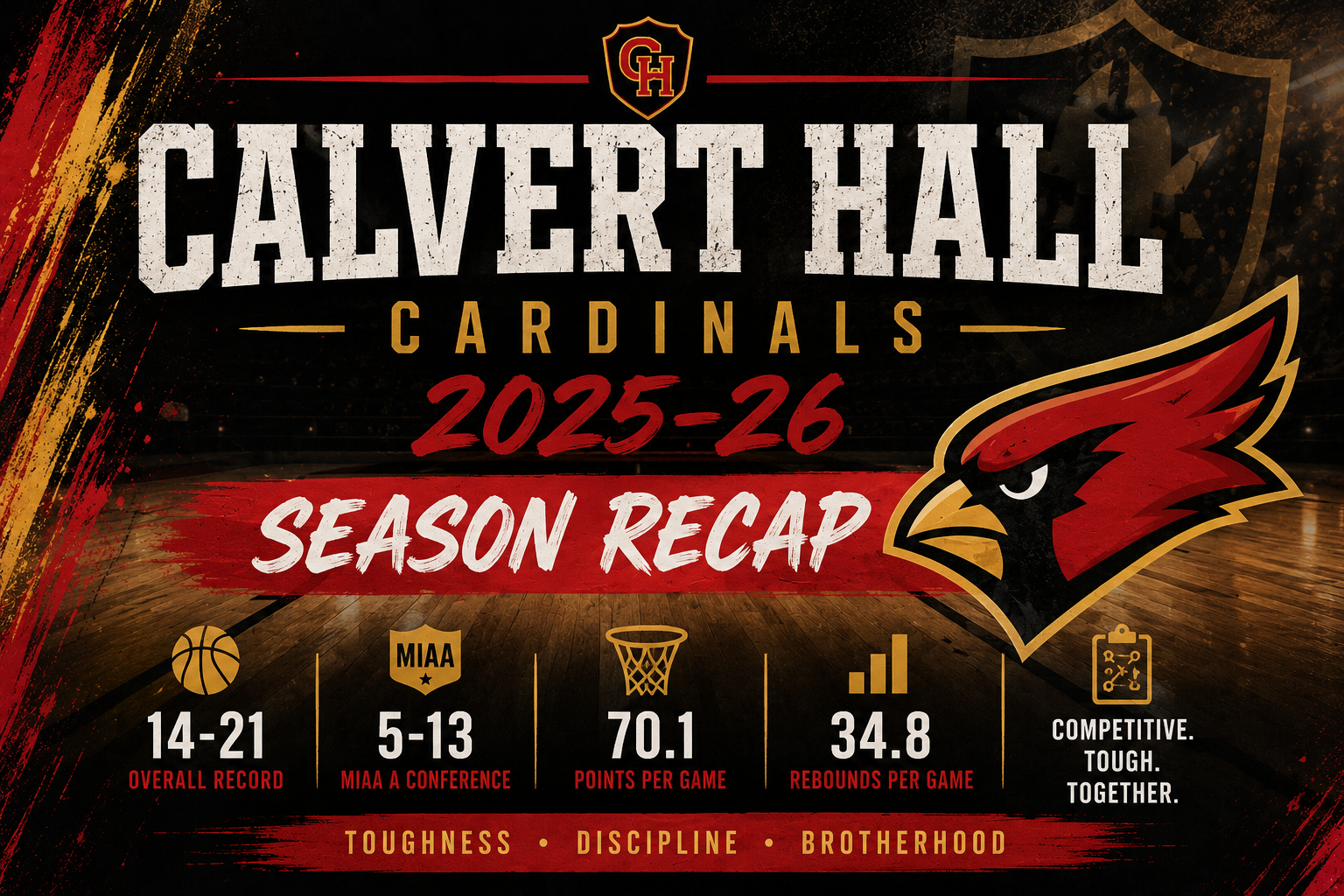
Calvert Hall finished the season with a 14-21 overall record under head coach David Gately while battling through one of the deepest basketball conferences in the country. The Cardinals faced nationally respected opponents throughout the season and regularly played teams loaded with Division I talent.
The final record does not fully explain how competitive portions of the season became.
Calvert Hall opened the year aggressively with several impressive offensive performances that immediately showed the roster possessed athleticism and scoring ability. Early victories over Rosedale Christian, New Hope Academy, Indian Creek, and Loyola Blakefield highlighted the offensive upside within the roster before conference play intensified.
A 93-67 victory against Rosedale Christian provided one of the most explosive offensive performances of the season. Ball movement looked sharp, transition scoring created easy baskets, and Calvert Hall consistently attacked the rim throughout the game.
Another strong offensive outing followed against New Hope Academy during a 74-51 victory.
Momentum continued building during a 90-57 road win at Indian Creek as Calvert Hall pushed tempo and generated offense from multiple scorers. Defensive pressure also improved during portions of the early schedule, creating transition opportunities and helping the Cardinals establish offensive rhythm.
Physicality quickly increased once MIAA conference play fully arrived.
The MIAA A Conference again proved why many consider it one of the toughest private school basketball leagues in America. St. Frances, Mount Carmel, Archbishop Spalding, Mount St. Joseph, and Glenelg Country all fielded highly competitive teams capable of overwhelming opponents with athleticism and depth.
Calvert Hall frequently faced roster disadvantages in size and depth against some of those programs, yet the Cardinals continued competing.
Several younger players gained critical experience during that process.
The season also represented another transition period for the basketball program following coaching and roster turnover during recent years. Building chemistry inside elite basketball conferences rarely happens overnight, especially against programs loaded with experienced upperclassmen and nationally ranked recruits.
Calvert Hall still showed flashes.
Strong guard play highlighted portions of the season. Offensive aggressiveness consistently appeared during transition situations. Defensive intensity improved during stretches against conference opponents. Several games remained competitive deep into the fourth quarter before depth eventually became a factor.
The Cardinals finished 5-13 inside conference competition according to MIAA standings.
That record reflected the difficulty of the schedule more than a lack of competitiveness.
Mount Carmel finished 30-11 overall.
Mount St. Joseph won 29 games.
St. Frances again operated as one of the top programs in Maryland basketball.
Archbishop Spalding remained loaded with athleticism and scoring.
Every conference night created playoff-level intensity.
Calvert Hall repeatedly faced teams capable of making deep postseason runs.
Several players still emerged as important contributors despite the difficult season.
Backcourt scoring and perimeter shooting helped keep Calvert Hall competitive during numerous stretches throughout the year. Quick guard play allowed the Cardinals to attack defenses before opponents fully settled into half-court sets.
Athletic wing play also became important.
Calvert Hall frequently needed versatile players capable of defending multiple positions because of the size mismatches presented throughout conference play. Several younger wings stepped into difficult defensive assignments against elite scorers night after night.
That experience should help the program long term.
Rebounding also became a major battle throughout much of the year.
The Cardinals often faced larger frontcourts inside conference games, forcing guards and wings to contribute heavily on the glass. Hustle rebounding and second-effort possessions became critical components whenever Calvert Hall pulled off victories or stayed competitive against stronger opponents.
Transition basketball occasionally became Calvert Hall’s best offensive weapon.
Fast-paced offense created easier scoring chances and prevented opposing defenses from fully setting up in the half court. Several of the team’s strongest offensive games occurred when Calvert Hall forced turnovers and attacked quickly in transition.
That style fit the roster.
Strong athleticism around the perimeter allowed the Cardinals to pressure ball handlers and create momentum-changing stretches during games. Several conference opponents struggled briefly whenever Calvert Hall increased defensive intensity and sped up tempo.
Consistency remained difficult, however.
The grind of the MIAA schedule often exposed depth concerns late in games. Fourth-quarter execution became challenging against deeper opponents capable of rotating fresh athletes continuously throughout games.
Still, competitive stretches continued showing up.
A close road victory against Friends School displayed toughness early in the year. Calvert Hall escaped with a 59-54 victory after executing late offensively and controlling important possessions during crunch time.
Wins against Loyola Blakefield and Archbishop Curley also provided strong moments during the season.
Rivalry games always carry additional intensity around Baltimore private school basketball, and Calvert Hall consistently competed emotionally during those matchups.
Leadership also mattered enormously throughout the season.
Veteran players carried major responsibility inside a difficult conference environment where confidence can disappear quickly after losing streaks. Calvert Hall’s upperclassmen continued competing despite the challenges presented weekly by nationally respected opponents.
That culture matters.
Programs rarely develop long-term success without players willing to battle through difficult seasons while helping younger teammates grow. Several underclassmen received important varsity minutes this season that should benefit the Cardinals moving forward.
Development became one of the most important themes surrounding the year.
Calvert Hall did not simply roll over against stronger opponents. The Cardinals continued fighting despite the record and regularly showed visible improvement throughout stretches of the season.
Offensive spacing improved during portions of conference play.
Shot selection became cleaner late in the year.
Defensive communication looked sharper against several playoff-caliber opponents.
The Cardinals also displayed offensive balance during multiple victories.
Scoring rarely came from only one player. Multiple contributors stepped into larger offensive roles throughout the season depending on matchups and injuries. Balanced scoring helped Calvert Hall stay unpredictable offensively during stretches.
Perimeter shooting became especially important.
Modern high school basketball increasingly revolves around spacing and three-point efficiency, especially inside elite conferences where size advantages frequently exist near the basket. Calvert Hall generated several major offensive runs this season through hot perimeter shooting stretches.
Ball movement often looked strongest when the Cardinals played confidently.
Quick passes and aggressive drives created open perimeter looks throughout the year. Offensive stagnation occasionally hurt the team during difficult conference stretches, but improved pace frequently changed momentum quickly.
Defensively, effort rarely disappeared.
Several opponents entered games with significant talent advantages, yet Calvert Hall consistently competed physically. Strong on-ball pressure and aggressive help defense occasionally disrupted elite offenses during portions of games.
The problem usually became sustaining that intensity over four quarters.
Depth issues often surfaced late.
Foul trouble also created problems against deeper conference opponents capable of attacking relentlessly inside the paint. Several close games slipped away late after rotations shortened because of fatigue or foul accumulation.
Still, valuable individual performances continued appearing throughout the year.
Multiple guards displayed improved shot creation ability as the season progressed. Athletic wings improved defensively against stronger competition. Interior players battled against some of the best frontcourts in Maryland basketball.
That experience should pay dividends later.
The MIAA remains unforgiving for developing teams.
Programs like Mount Carmel, St. Frances, and Mount St. Joseph routinely field college-level athletes across entire rotations. Young players either improve quickly or struggle badly inside that environment.
Calvert Hall’s roster gained important experience through adversity.
Several losses came against teams that eventually finished among Maryland’s best programs statistically and nationally.
That context matters.
The Cardinals also played an aggressive nonconference schedule designed to challenge the roster physically and mentally before postseason play arrived. Tough schedules often hurt records but help long-term development.
Calvert Hall clearly embraced that philosophy.
Coaching adjustments also became noticeable during portions of the year.
Offensive sets evolved throughout conference play as the coaching staff searched for better spacing and more consistent scoring opportunities. Defensive rotations improved against pick-and-roll actions late in the season.
Those details matter inside elite basketball conferences.
One defensive breakdown or rushed offensive possession can completely shift momentum against high-level opponents. Calvert Hall gradually reduced some of those mistakes as younger players gained varsity experience.
The Cardinals also showed resilience after difficult stretches.
Losing streaks inside the MIAA can destroy confidence quickly because almost every opponent features high-level athleticism and experienced coaching staffs. Calvert Hall continued competing regardless of recent results.
Several late-season games reflected that toughness.
Physical rebounding battles, aggressive defensive stretches, and improved offensive pace allowed the Cardinals to remain competitive against stronger conference opponents during portions of the second half of the season.
Energy rarely disappeared.
That fight says plenty about the locker room culture.
Calvert Hall basketball has historically built its identity around toughness, discipline, and effort regardless of record. Those traits still appeared throughout the 2025-26 season despite the difficult results.
The program also continued drawing strong support from students, alumni, and families throughout the year. Baltimore private school basketball remains one of the best atmospheres in Maryland sports, especially during rivalry games and conference matchups.
Calvert Hall games again carried that intensity.
Packed gyms, physical play, loud student sections, and emotional rivalry moments consistently created playoff-style environments during the season.
That atmosphere helped younger players gain experience quickly.
Several underclassmen played important minutes this year that likely would not have existed on deeper veteran rosters. Development sometimes accelerates fastest through difficult competition.
Calvert Hall experienced exactly that process.
The Cardinals also showed occasional offensive explosiveness that should encourage the coaching staff moving forward. Games above 70 or 80 points demonstrated the athleticism and offensive potential inside portions of the roster.
Finishing consistency remains the next step.
Shot selection, rebounding, late-game execution, and defensive discipline often separate middle-tier MIAA teams from championship contenders. Calvert Hall experienced that reality repeatedly this season.
Still, growth appeared.
That matters for the future of the program.
Several players improved noticeably between the beginning and end of the season. Defensive confidence increased. Offensive aggression improved. Decision-making looked stronger against pressure defenses.
Those developments rarely show up directly inside standings.
The final record only tells part of the story.
Calvert Hall competed inside arguably the toughest basketball environment in Maryland while continuing to develop younger contributors against elite competition. That process often creates painful short-term results before programs eventually take major steps forward.
The Cardinals hope this season becomes part of that long-term progression.
Baltimore basketball remains brutally competitive, especially inside the MIAA. Programs reload constantly with experienced transfers, nationally recruited prospects, and deep rotations capable of overwhelming opponents physically.
Calvert Hall continued battling anyway.
That competitiveness never disappeared.
Several returning players should benefit enormously from the experience gained throughout the 2025-26 season. Conference experience against elite athleticism often accelerates player development faster than any practice environment can replicate.
The Cardinals also continue building under David Gately’s leadership.
Program stability matters enormously in high school basketball, especially inside conferences where coaching continuity often determines long-term success. Developing chemistry, identity, and trust takes time.
Calvert Hall hopes this season laid groundwork for future improvement.
The numbers may not fully reflect the effort shown throughout the year, but the Cardinals continued competing inside one of the hardest schedules in Maryland basketball.
Several players emerged stronger because of it.
Several younger contributors gained critical varsity experience because of it.
And despite the losses, Calvert Hall continued showing the toughness and competitiveness that have long defined Cardinals athletics.