
When people talk about the greatest draft classes in Baltimore Ravens history, the conversation almost always starts with the legendary 1996 class featuring Ray Lewis and Jonathan Ogden or the 2018 class that brought Lamar Jackson to Baltimore.
But quietly, over time, the Ravens’ 2007 draft class has become one of the most underrated and important groups the organization ever assembled.
At first glance, the class did not receive overwhelming national praise. Baltimore was coming off a 13-3 season in 2006, but the roster was aging quickly. The defense was still elite behind Ray Lewis and Ed Reed, but offensively the Ravens desperately needed younger talent up front and more playmakers around veteran quarterback Steve McNair.
General manager Ozzie Newsome approached the draft the same way he often did during Baltimore’s most successful years: find physical football players, trust the scouting department, and invest heavily in the trenches.
Nearly two decades later, it is clear this class helped lay the groundwork for the Ravens teams that would eventually win Super Bowl XLVII.
The Ravens entered the 2007 NFL Draft with seven selections. Those picks included Ben Grubbs, Yamon Figurs, Marshal Yanda, Antwan Barnes, Le’Ron McClain, Troy Smith, and Prescott Burgess.
Some became stars. Some became role players. Some barely contributed.
But one selection changed everything.
Round 1, Pick 29: Ben Grubbs, Guard, Auburn
The Ravens used their first-round pick on Auburn offensive lineman Ben Grubbs, a powerful and athletic guard who immediately fit the identity Baltimore wanted offensively.
At the time, the pick made complete sense.
Baltimore’s offensive line was beginning to show signs of age and decline, and the Ravens needed more stability protecting McNair while also improving the run game after trading for Willis McGahee earlier that offseason.
Grubbs stepped into the lineup quickly and became one of the better young guards in football. By his second season, he had already established himself as a dependable starter. He eventually made two Pro Bowls during his NFL career and became a major part of Baltimore’s offensive front during the late 2000s.
What made Grubbs valuable was consistency.
He was not flashy. He was not constantly making headlines. But for several years, he gave the Ravens stability at a position that often gets overlooked until it becomes a problem.
Baltimore has long valued offensive linemen who can move in space, block physically in the run game, and survive against elite AFC pass rushers. Grubbs checked all those boxes.
Looking back, using a late first-round pick on a dependable Pro Bowl guard was tremendous value.
Round 3, Pick 74: Yamon Figurs, Wide Receiver, Kansas State
The Ravens’ second selection was far less successful.
Yamon Figurs entered the league with blazing speed and return ability, but his impact offensively never developed the way Baltimore hoped.
At Kansas State, Figurs was viewed as an explosive athlete capable of stretching defenses vertically. Baltimore hoped he could provide another dimension to an offense that lacked speed on the outside.
Instead, his career became defined mostly by special teams contributions.
Figurs showed flashes as a returner and occasionally provided big-play ability, but he finished his Ravens career with only 56 receptions and two receiving touchdowns over four seasons.
Part of the issue was Baltimore’s offensive instability during that era. The Ravens cycled through quarterbacks, offensive coordinators, and offensive philosophies throughout the late 2000s. Developing wide receivers became a constant organizational struggle.
Still, Figurs ultimately never developed into the consistent offensive weapon the Ravens envisioned.
Compared to the rest of this class, he became one of the few disappointments.
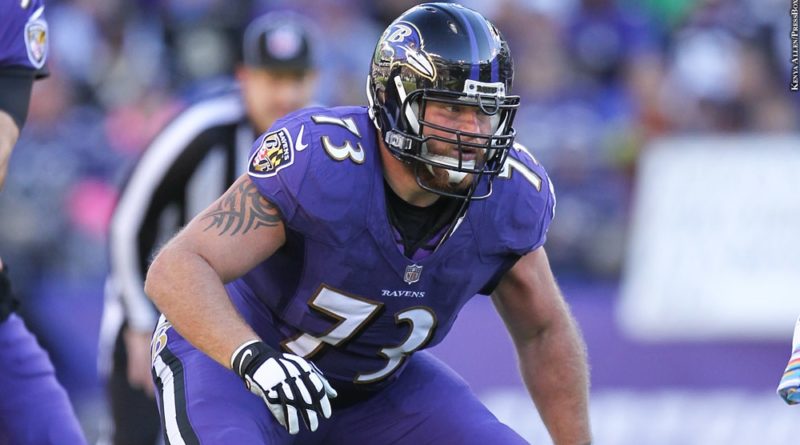
Round 3, Pick 86: Marshal Yanda, Offensive Lineman, Iowa
This is where the draft changed.
When the Ravens selected Marshal Yanda out of Iowa in the third round, few outside Baltimore realized what the organization had found.
Yanda eventually became one of the greatest players in franchise history.
Not one of the best offensive linemen.
One of the best players.
That distinction matters.
Over 13 NFL seasons, Yanda earned eight Pro Bowl selections, two First-Team All-Pro honors, and built a Hall of Fame caliber résumé while becoming the centerpiece of Baltimore’s offensive line.
What made Yanda special was not just talent. It was toughness, versatility, and consistency.
He could play tackle. He could play guard. He could dominate in pass protection and overwhelm defenders in the run game. Week after week, year after year, Yanda became the type of player coaches never had to worry about.
During Baltimore’s Super Bowl XLVII run, Yanda was arguably the best offensive lineman on the field throughout the postseason.
The Ravens have had legendary defenders throughout franchise history, but Yanda represented something different. He became the rare offensive player who embodied Baltimore football completely.
Physical.
Reliable.
Tough.
Smart.
For Ozzie Newsome to find that level of talent in the third round remains one of the greatest draft steals in franchise history.
It is not an exaggeration to say the entire 2007 class becomes a success because of Yanda alone.
Round 4, Pick 134: Antwan Barnes, Linebacker, Florida International
The Ravens continued building defensive depth by selecting Antwan Barnes in the fourth round.
Barnes never became a star in Baltimore, but he provided solid rotational value and later developed into a productive pass rusher elsewhere in the league.
During his time with the Ravens, Barnes contributed mostly as a situational linebacker and special teams player. Baltimore’s defense at the time was still loaded with veterans including Ray Lewis, Terrell Suggs, Bart Scott, and Adalius Thomas, limiting opportunities for younger linebackers.
Still, Barnes showed flashes of athleticism and pass-rushing ability.
He eventually recorded 44 career sacks in the NFL, proving he carved out a respectable professional career even if his biggest success came after leaving Baltimore.
For a fourth-round selection, Barnes provided reasonable value.
Round 4, Pick 137: Le’Ron McClain, Fullback, Alabama
One of the more forgotten players from this class is Le’Ron McClain, but Ravens fans from that era remember how important he became.
McClain was the definition of Baltimore football during the late 2000s.
Physical. Aggressive. Tough between the tackles.
Originally drafted as a fullback, McClain became far more than just a blocker. In 2008, he rushed for 902 yards and 10 touchdowns while earning a Pro Bowl selection.
That season remains one of the more unique offensive years in Ravens history because McClain essentially became a power running back in a committee offense alongside Willis McGahee and rookie Ray Rice.
Baltimore leaned heavily into physical football under head coach Brian Billick and later John Harbaugh, and McClain fit perfectly within that identity.
While his peak was relatively short, McClain absolutely outperformed expectations for a fourth-round pick.
Round 5, Pick 174: Troy Smith, Quarterback, Ohio State
When the Ravens selected Troy Smith in the fifth round, many fans believed Baltimore may have found a future starting quarterback.
Smith entered the NFL as one of the most accomplished college football players in the country after winning the Heisman Trophy at Ohio State.
There was excitement surrounding his athleticism and playmaking ability, especially as Baltimore’s quarterback situation became increasingly uncertain following Steve McNair’s decline.
Unfortunately, Smith’s NFL career never fully materialized.
He showed flashes late during the disastrous 2007 season, particularly in a win over Pittsburgh where his mobility gave Baltimore’s offense life. But illness, injuries, and inconsistency prevented him from ever securing a long-term starting role.
Still, for a fifth-round pick, Smith generated significant intrigue and became a memorable part of that transitional Ravens era.
Round 6, Pick 207: Prescott Burgess, Linebacker, Michigan
The final pick of Baltimore’s draft was linebacker Prescott Burgess.
Burgess primarily contributed on special teams and as a reserve defender before injuries limited his career.
Like many late-round Ravens linebackers during that era, he benefited from Baltimore’s defensive culture and veteran leadership. But ultimately, he never developed into a major contributor defensively.
Still, sixth-round picks making NFL rosters at all is often considered a success.
The Legacy of the 2007 Draft Class
Statistically, the 2007 Ravens draft class may not appear overwhelming compared to some of Baltimore’s legendary groups.
But context matters.
This draft helped transition the Ravens from one era into another.
Ben Grubbs solidified the offensive line.
Le’Ron McClain became a Pro Bowl power back.
Antwan Barnes developed into a productive NFL defender.
And Marshal Yanda became a franchise icon.
That alone makes this class memorable.
The Ravens have built one of the NFL’s strongest drafting reputations largely because of classes like this. Ozzie Newsome consistently found elite value outside the first round, especially along the offensive line.
Yanda perfectly represented that philosophy.
The Ravens did not need headlines in 2007. They needed foundational football players.
That is exactly what they found.
Looking back now, nearly twenty years later, the 2007 draft class deserves far more recognition than it usually receives. It was not flashy. It did not dominate national storylines.
But it produced one of the greatest offensive linemen in NFL history and several players who helped shape Baltimore football during a critical transition period.
For a franchise built on toughness, physicality, and long-term roster development, the 2007 draft quietly became one of the defining classes of the Ozzie Newsome era.