
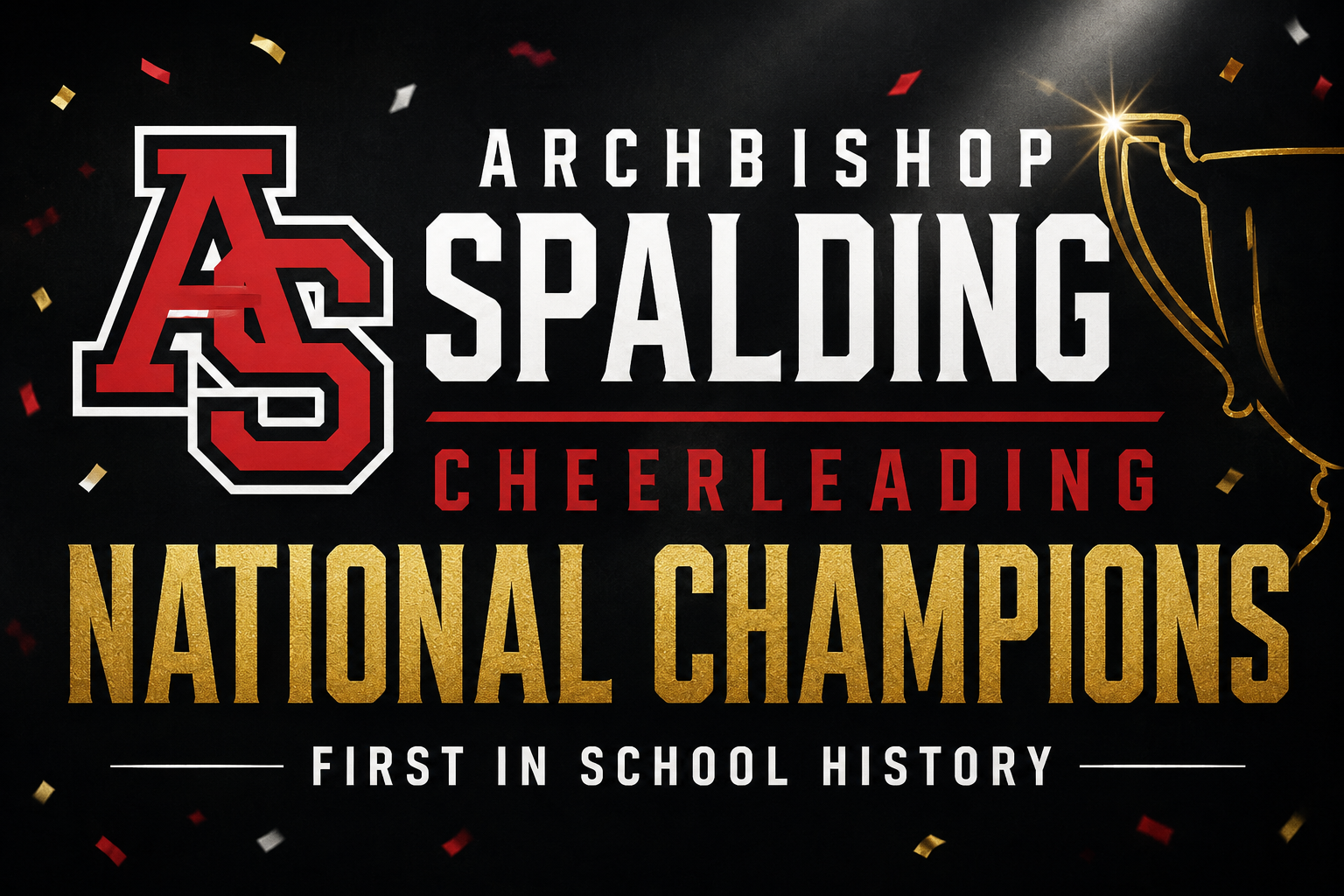
Archbishop Spalding Cheerleaders Make School History With First National Championship
The trophy finally came home to Severn.
After years of growth, close calls, long practices, regional competitions and steady investment in the school’s spirit programs, the cheerleading team at Archbishop Spalding High School captured the first national championship in program history during the 2026 competition season, delivering one of the biggest athletic accomplishments the school has seen in decades.
The championship marked a breakthrough moment not only for the cheer program, but for the entire Archbishop Spalding athletic department. A school long known across Maryland for powerhouse football, lacrosse, basketball and wrestling programs added another milestone to its growing national reputation when the Cavaliers reached the top of the competitive cheer world.
Social media posts from the school and affiliated championship accounts confirmed the historic achievement and celebrated the team’s national-title performance during the spring championship season.
For Archbishop Spalding students, alumni and families, the championship represented far more than one routine on one weekend. The title validated years of work from athletes and coaches who pushed the program from local contender to national-level force.
“This season will be remembered as a turning point for the program,” the school wrote earlier in the year after another historic postseason finish.
That turning point ultimately became a championship.
A Program Years in the Making
Competitive cheerleading often exists in the background of high school athletics despite demanding extraordinary athletic ability, conditioning and discipline.
Athletes train year-round. Teams practice stunts repeatedly to eliminate deductions measured in tenths of points. One missed cradle, unstable pyramid or timing issue can erase months of preparation.
Archbishop Spalding’s rise did not happen overnight.
The Cavaliers steadily built credibility on the regional circuit over several seasons before breaking through nationally during the 2025-26 school year. Earlier in 2026, the program celebrated what already counted as a landmark accomplishment after reaching finals and placing among the nation’s best teams at a major national competition.
That momentum carried into the remainder of the competitive season.
Instead of treating the finals appearance as the peak, Spalding used it as motivation.
The team sharpened execution, improved synchronization and elevated difficulty throughout the season. Coaches refined stunt sequences while athletes developed stronger timing and cleaner transitions. Conditioning intensified. Confidence grew.
Then came the routine that changed school history.
What Makes Competitive Cheer So Difficult
Outside the sport, many people misunderstand the complexity of competitive cheerleading.
Modern routines combine gymnastics, acrobatics, dance, synchronized choreography, tumbling passes, partner stunts and pyramids inside performances that often last less than three minutes. Judges evaluate execution, difficulty, timing, creativity and overall presentation.
Every movement matters.
Teams lose points for incomplete stunts, unstable landings, falls, synchronization issues or timing mistakes. Elite programs often separate themselves by fractions of a point.
The physical demands rival almost any high school sport.
Athletes train core strength, flexibility, endurance and explosiveness simultaneously. Flyers trust bases completely during basket tosses and elevated stunts. Bases absorb repeated physical strain while maintaining precision under pressure.
The sport’s national popularity exploded over the last several decades through organizations such as the Universal Cheerleaders Association and Varsity Spirit, which helped standardize competitions and expand exposure nationally.
That growth turned national championships into major events featuring schools from across the country.
Archbishop Spalding now owns one of those titles.
The Rise of Spalding Athletics
The championship added another chapter to one of Maryland’s most recognizable Catholic high school athletic programs.
Founded in the 1960s and located in Anne Arundel County, Archbishop Spalding evolved into one of the region’s premier private-school athletic institutions.
The Cavaliers built strong reputations in football, boys and girls lacrosse, basketball, wrestling, soccer and baseball over the years. National recruits, Division I athletes and professional players emerged from the school consistently.
The cheerleading title demonstrated another evolution within the athletic department.
Spirit programs increasingly occupy a larger role in high school athletics nationwide. Schools now invest more resources into competitive cheer and dance because of the level of athleticism required and the national exposure available through elite competitions.
Spalding embraced that shift.
The school’s athletics page highlighted the cheer team’s historic season and celebrated the accomplishment alongside championships from other varsity programs.
That public support matters.
Championship-level cheer programs require administrative backing, travel funding, gym availability, coaching continuity and long-term development. The national title reflected organizational commitment throughout the school community.
Leadership Behind the Championship
Championship teams rarely emerge without strong leadership.
According to the school athletics roster page, Lindsey Miller served as head coach for the varsity cheer program during the 2025-26 season.
Behind every successful cheer program stands an enormous amount of unseen work from coaches.
Practices often begin before sunrise or continue late into the evening. Coaches review film, adjust choreography, monitor athlete safety and build routines designed to maximize scoring potential while minimizing deductions.
Cheer coaches also manage something unique to the sport: trust.
Athletes literally place teammates above their heads during routines. One hesitation can disrupt an entire sequence. Elite programs develop chemistry through repetition and communication.
Spalding’s athletes repeatedly credited teamwork and commitment throughout the season on social media and school coverage.
That chemistry showed during championship performances.
The Importance of Representation
The title carried significance beyond the gym.
For younger athletes across Anne Arundel County and the Baltimore-Washington region, the championship created proof that Maryland programs can compete nationally against powerhouse schools from traditional cheer hotbeds such as Texas, Kentucky, Florida and Louisiana.
Competitive cheer historically developed stronger national recognition in southern states where all-star cheer culture expanded rapidly. Maryland schools often faced additional challenges gaining national visibility.
Spalding changed that conversation.
The Cavaliers demonstrated that a Maryland private-school program could compete against elite national talent and finish on top.
That matters for recruiting, youth participation and long-term growth within the sport statewide.
The Emotional Weight of the Championship
Championship moments in cheer differ from many traditional sports.
There is no running clock.
No seventh inning.
No fourth quarter comeback.
Everything builds toward one routine.
Months of preparation depend on less than three minutes of execution under intense pressure.
Athletes wait backstage knowing one mistake could end championship hopes instantly. Music begins. Adrenaline spikes. Tumbling starts. Stunts rise.
Then comes silence.
Teams wait through scoring announcements understanding that tiny deductions may decide everything.
When Spalding heard its name announced as national champion, years of work erupted emotionally all at once.
Parents cried.
Coaches embraced.
Athletes celebrated a moment no previous team in school history had achieved.
Those memories stay forever.
Earlier Signs of a Breakthrough
The championship did not arrive without warning signs.
Earlier in the season, Spalding posted strong finishes at regional events and qualifiers. The varsity roster page documented successful appearances throughout the competition calendar, including a first-place regional finish during the fall season.
That momentum built confidence entering national competition season.
The school also publicly celebrated historic progress when the team reached finals at the National High School Cheerleading Championship earlier in 2026.
Programs often experience breakthrough stages incrementally:
First comes qualifying.
Then finals appearances.
Then podium contention.
Eventually comes the title.
Spalding completed the climb.
Why Championships Matter to Schools
Championships shape school identity.
Students remember them decades later. Alumni reconnect because of them. Younger athletes choose schools partly because of them.
At private schools especially, successful athletics programs often become major community pillars.
Archbishop Spalding already carried strong athletic credibility across Maryland. The cheerleading title broadened that reputation further and showcased the school’s expanding success across multiple sports and activities.
The victory also reinforced the importance of female athletics and spirit programs within school communities.
Cheerleading requires extraordinary athletic discipline yet often receives less mainstream coverage than football or basketball. National titles help change that dynamic.
Spalding’s championship deserved major recognition because the accomplishment matched the difficulty and prestige of any other national athletic title.
The Evolution of Cheerleading
Competitive cheerleading evolved dramatically over the last half century.
Originally focused primarily on crowd leadership and sideline energy, modern cheer transformed into a highly technical athletic competition featuring advanced tumbling, synchronized choreography and acrobatic stunts.
National governing organizations expanded the sport’s structure while television and streaming platforms increased visibility.
Today’s elite high school cheer athletes often train year-round, participate in private tumbling instruction and compete in all-star programs outside school seasons.
The level of athleticism required continues rising annually.
Spalding’s championship routine emerged from that modern environment.
Building a Legacy
One championship changes expectations forever.
Future Spalding cheer teams will no longer compete hoping to make history.
Now they defend it.
The Cavaliers established a new standard for the program and created pressure that successful programs eventually face: sustaining excellence.
That challenge can become difficult.
Opponents now recognize Spalding nationally. Judges expect elite execution. Returning athletes must lead younger teammates into a culture shaped by championship expectations.
Still, programs often gain momentum after breakthrough victories because younger athletes want to join winning traditions.
Spalding’s pipeline likely strengthens after the title.
Community Celebration
Championships unite communities beyond campuses.
Students filled social media with celebration posts. Parents shared photos and videos from competition weekend. Alumni praised the accomplishment online.
School officials prominently featured the achievement through athletics updates and congratulatory announcements.
That widespread support reflected how deeply athletics connect communities at schools like Archbishop Spalding.
The Cavaliers compete in one of the nation’s strongest private-school athletic regions. Success generates pride throughout Anne Arundel County and beyond.
The cheerleading title added another banner-worthy moment.
The Athletes Behind the Achievement
Every championship story ultimately belongs to athletes.
The varsity roster included students from communities throughout the region, including Annapolis, Bowie, Crofton, Edgewater, Elkridge, Severna Park and Severn.
Those athletes balanced school responsibilities with rigorous practice schedules throughout the year.
Competitive cheer demands tremendous sacrifice.
Weekends disappear into travel competitions. Injuries require rehabilitation. Conditioning sessions push endurance repeatedly. Athletes practice routines until muscle memory takes over.
Yet the sacrifices become worthwhile when championships arrive.
Spalding’s athletes earned a permanent place in school history because of that commitment.
Maryland’s Expanding National Athletic Presence
Maryland high school athletics continue gaining stronger national attention across multiple sports.
Football programs regularly produce Division I recruits. Lacrosse remains nationally respected. Basketball talent continues expanding throughout the Baltimore-Washington corridor.
Now competitive cheer joins that list more prominently.
Spalding’s championship demonstrated the state can produce elite spirit programs capable of winning nationally against traditional powers.
That success may encourage additional Maryland schools to invest further into competitive cheer infrastructure and coaching development.
What Comes Next
The challenge now shifts from reaching the top to staying there.
National championships create visibility. Visibility creates expectations.
Spalding’s cheerleaders will enter future seasons carrying a target while attempting to maintain elite standards established during the title run.
Still, no matter what happens next season or five years from now, the 2026 team already secured permanent recognition inside school history.
The first championship always matters differently.
Nobody can ever take away that distinction.
Future teams may win more titles. The program may become a national powerhouse.
But one group always remains the first.
At Archbishop Spalding, that honor now belongs to the Cavaliers team that transformed years of hard work into a national championship and delivered one of the biggest moments the school’s athletic department has ever celebrated.