
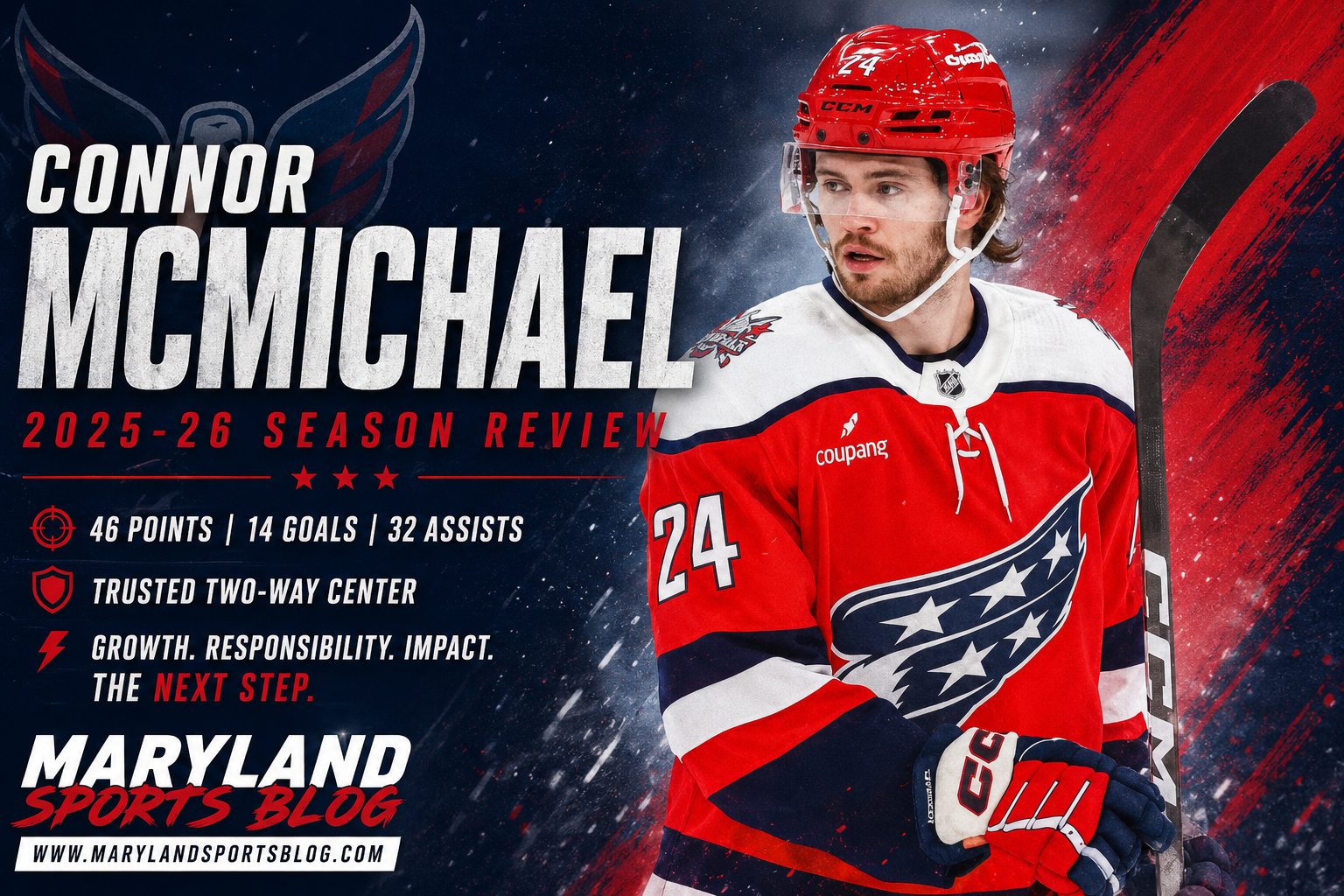
Connor McMichael’s 2025-26 Season Review: Growth, Responsibility and the Next Step for Washington
The Washington Capitals entered the 2025-26 season with expectations that stretched far beyond simply making the playoffs. Veterans still anchored the locker room, but younger forwards had to carry more responsibility every month. Few players embodied that transition more than Connor McMichael.
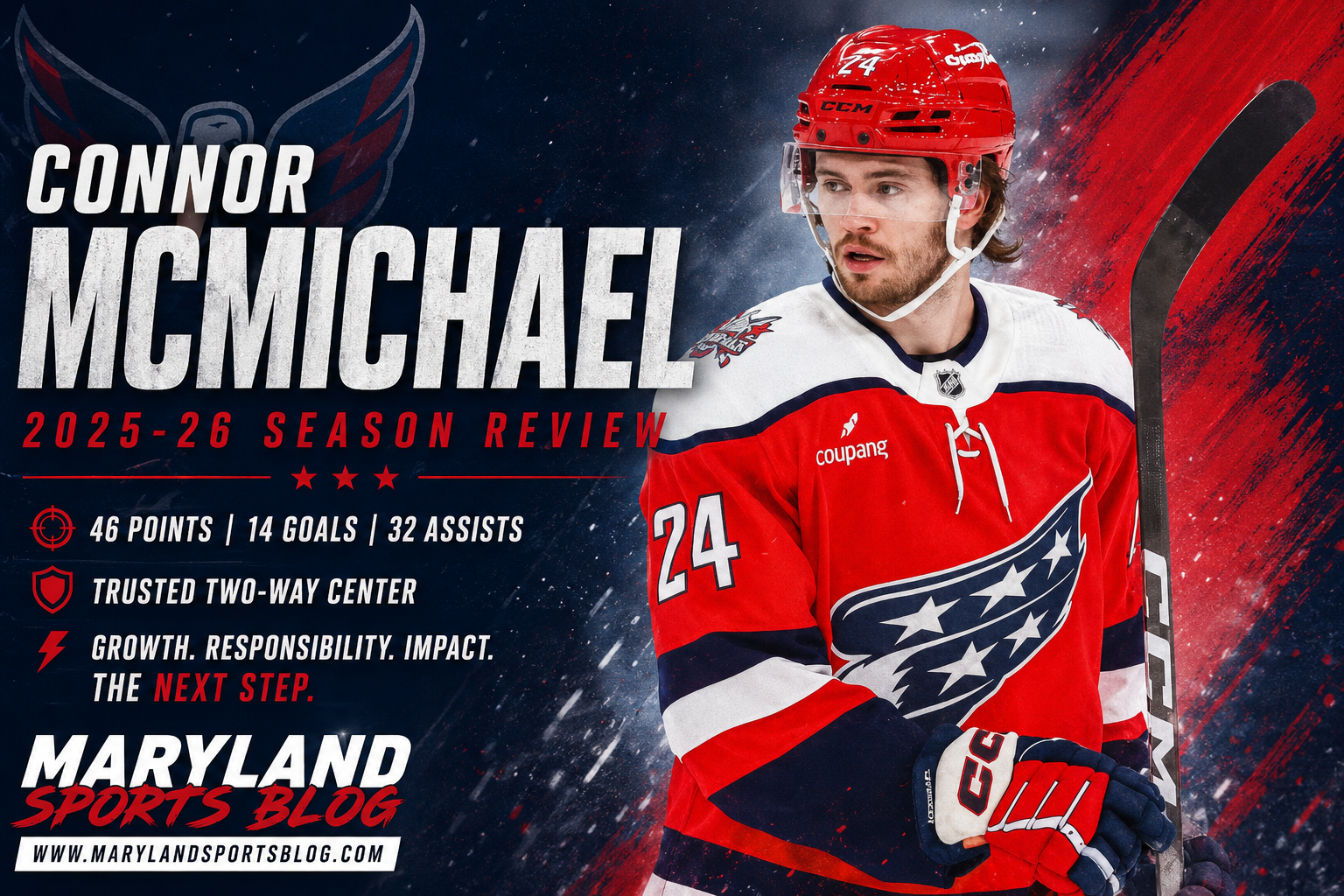
McMichael did not post the loudest numbers on the roster, but the 25-year-old center continued evolving into one of the organization’s most dependable two-way forwards. Offensive production remained steady, defensive assignments increased, and special-teams minutes expanded as the season progressed. Washington leaned on McMichael in difficult situations, especially during injuries and schedule-heavy stretches.
The season also reinforced one major reality for the Capitals: McMichael no longer looks like a prospect trying to survive in the NHL. Washington now views him as part of the core.
For more Capitals coverage, check out along with recent stories on players like , and .
External statistical references for McMichael’s season can also be found on , and .
Season Snapshot
McMichael finished the 2025-26 season with 14 goals and 32 assists for 46 points while appearing in nearly every game on Washington’s schedule. Statistical models and tracking sites also showed continued growth in possession play and defensive reliability.
Those totals did not fully capture the impact McMichael made throughout the season. Washington deployed him in several different roles. Some nights featured top-six offensive minutes. Other games required shutdown assignments against elite centers. Coaches trusted him on the penalty kill and late in games protecting leads.
That versatility became one of the defining themes of the season.
The Capitals often asked McMichael to adapt on the fly. Injuries altered line combinations throughout the year. Matchups shifted constantly. Washington sometimes needed offense from the third line, while other nights demanded defensive structure and puck management.
McMichael handled every assignment without complaint.
That reliability matters inside a locker room trying to balance aging veterans with younger talent.
Early Season Momentum
Washington opened the year searching for chemistry across all four lines. The roster featured returning veterans, offseason additions and younger forwards trying to cement long-term roles.
McMichael immediately looked comfortable.
Skating remained one of the strongest elements of his game. Washington consistently used controlled zone entries to create pressure, and McMichael excelled at carrying the puck through the neutral zone with speed. Opposing defenses struggled to angle him toward the boards because of his edge work and lateral movement.
Several early-season games highlighted that confidence.
McMichael attacked defenders instead of deferring. Shot totals increased. Offensive-zone puck touches rose dramatically compared to earlier seasons. Washington’s coaching staff encouraged that aggressiveness because the team needed secondary scoring behind the top unit.
The confidence showed on the power play as well.
McMichael started rotating into different power-play looks throughout October and November. Quick puck movement and improved anticipation around the slot allowed him to generate dangerous scoring chances even when he did not finish plays himself.
Washington’s transition game improved significantly whenever McMichael played with pace.
Offensive Development
One of the biggest criticisms earlier in McMichael’s career involved consistency. Talent always existed. Hockey IQ never disappeared. The question centered around whether the production could match the skill.
The 2025-26 season provided another step forward.
McMichael recorded 32 assists because of improved vision in traffic and smarter puck distribution. Rather than forcing low-percentage shots, he consistently found trailing forwards entering dangerous areas.
Washington generated several rush opportunities directly because of McMichael’s patience with the puck.
The center also improved his timing around the net. Earlier in his NHL career, McMichael often floated around the perimeter too long. During the 2025-26 season, he attacked soft areas between defenders with much more confidence.
That adjustment helped create rebounds, secondary scoring opportunities and deflections.
The goal total dropped from the previous season’s career-high pace, but overall offensive involvement remained strong. McMichael became a more complete offensive player rather than a streak scorer.
The Importance of Versatility
Modern NHL rosters demand adaptable players.
McMichael became exactly that for Washington.
Some games required him at center. Other nights shifted him to wing depending on matchups. Coaches trusted him against skilled lines because of his defensive awareness and positioning.
That trust does not happen accidentally.
McMichael improved dramatically in puck support situations. Defensive-zone coverage looked tighter. Backchecking routes became more disciplined. Washington relied on him late in periods and during critical defensive shifts.
Faceoff work also improved.
Although not dominant in the circle, McMichael battled harder for possession and showed more technical growth throughout the season. Every small improvement mattered because Washington often played tight games where puck possession became critical.
The coaching staff clearly viewed him as more than an offensive depth player.
Chemistry With Teammates
Several line combinations worked throughout the year, but McMichael consistently elevated linemates with his pace and intelligence.
Washington’s offensive structure relied heavily on controlled entries and puck support. McMichael thrived in that environment because of his ability to read developing plays before they fully opened.
The chemistry with fellow middle-six forwards became especially noticeable during stretches where Washington battled injuries.
McMichael often acted as the stabilizer on those lines.
The Capitals could pair him with a shooter, a forechecking winger or another playmaker and still maintain offensive flow. Few young forwards adapt that easily.
That versatility helped Washington survive difficult parts of the schedule.
Defensive Growth
The most impressive part of McMichael’s season may have come away from the puck.
Defensive awareness improved substantially.
Washington’s coaches frequently matched McMichael against dangerous transition teams because they trusted his positioning and back pressure. That responsibility increased during the second half of the year.
The center disrupted passing lanes more consistently than earlier seasons. Stick positioning improved. Board battles became more competitive. Neutral-zone reads looked sharper.
McMichael still has room to improve physically against heavier centers, but the commitment level remained high throughout the year.
That effort matters.
Coaches reward players who can handle difficult minutes without sacrificing offensive production. McMichael reached that stage during the 2025-26 season.
Special Teams Impact
Washington’s special teams relied heavily on veteran leadership, but McMichael carved out an increasingly important role.
The power-play unit benefited from his puck movement and ability to create passing angles. McMichael rarely forced plays. Instead, he slowed the pace when necessary and waited for defensive breakdowns.
Penalty killing may have represented the biggest area of growth.
Washington trusted McMichael in aggressive penalty-killing formations because of his skating and anticipation. Opposing power plays struggled to gain clean zone entries against him.
Several shorthanded opportunities developed directly because of McMichael’s pressure near the blue line.
Those plays changed momentum throughout the season.
Midseason Challenges
Not every stretch looked perfect.
McMichael endured scoring droughts during portions of January and February. Washington’s offense occasionally disappeared during road trips, and McMichael’s production dipped with the rest of the lineup.
Physical teams also caused problems.
Opponents targeted Washington’s younger forwards with heavy forechecking pressure. McMichael sometimes struggled against larger defensive pairings that disrupted offensive rhythm along the walls.
Still, the response mattered more than the slump itself.
McMichael never stopped competing defensively. Coaches continued trusting him. Ice time remained stable because Washington valued the complete game rather than judging him solely by goals.
That represented major progress compared to earlier years.
Leadership Growth
Veterans still drive the culture inside Washington’s locker room, but younger players increasingly carry larger voices.
McMichael showed signs of growing leadership throughout the year.
Teammates frequently praised his work ethic and consistency. Coaches referenced preparation and maturity in interviews. The young center looked more comfortable handling media responsibilities and pressure situations.
That growth matters for the future of the organization.
Washington eventually must transition into a younger era. McMichael appears positioned to help lead that process.
Statistical Context
McMichael’s 46-point season may not dominate league headlines, but context matters.
Washington spread offensive responsibility across several lines rather than relying entirely on one scoring unit. Ice time fluctuated based on matchups and special teams. McMichael also played more defensively difficult minutes than several comparable young forwards around the league.
The underlying metrics reinforced his value.
Possession numbers improved. Transition success rates climbed. Defensive impacts became more noticeable. Several analytics sites graded McMichael positively because of his balanced contributions.
The numbers supported what Washington coaches saw nightly.
Skating Remains Elite
McMichael’s skating separates him from many middle-six forwards around the league.
Acceleration creates immediate pressure in transition. Edge work allows quick directional changes. Defensive recoveries happen faster because of that mobility.
Washington built portions of its forecheck around speed this season, and McMichael fit perfectly into that philosophy.
The center consistently pressured opposing defenders into rushed decisions.
That pressure led to turnovers and offensive-zone time.
The Future Role
The biggest question surrounding McMichael now involves ceiling.
Can he become a legitimate top-six center long term?
The tools exist.
Playmaking ability continues improving. Defensive reliability already looks NHL-caliber. Skating provides separation speed. Offensive instincts remain strong.
Consistency now becomes the final hurdle.
If McMichael pushes the goal total closer to 20-25 while maintaining strong defensive play, Washington could view him as a foundational top-six piece for years.
That possibility feels realistic after the 2025-26 season.
Contract and Organizational Outlook
McMichael’s contract situation will become increasingly important moving forward. Washington understands the value of cost-controlled younger forwards who can contribute across multiple situations.
The organization likely views him as a long-term piece rather than a temporary depth option.
That belief stems from steady development rather than one breakout month.
McMichael earned trust through consistency.
Best Moments of the Season
Several games highlighted McMichael’s growth.
A multi-point performance against Pittsburgh showcased his offensive instincts and confidence carrying the puck through the neutral zone. Another strong outing versus Calgary demonstrated his improved finishing ability around the net.
Late-season performances also stood out.
Washington pushed for playoff positioning while dealing with fatigue and injuries. McMichael responded with strong two-way hockey during several important stretches.
Those moments reinforced his value.
Areas Still Needing Improvement
No player finishes development at age 25.
McMichael still needs more consistency finishing scoring chances. Shot release can improve further. Physical strength remains an area where additional growth could help during playoff-style hockey.
Washington also wants slightly more offensive aggression.
At times, McMichael still deferred too quickly rather than attacking defenders directly. Coaches likely want more shooting volume because the skill level supports it.
Those improvements could unlock another offensive tier.
Fan Expectations Continue Rising
Capitals fans increasingly expect more from McMichael because the flashes of high-end talent now appear consistently.
That expectation represents a compliment.
Earlier in his career, fans debated whether McMichael could secure a permanent NHL role. Now discussions center around whether he can become a major offensive contributor.
The conversation changed completely.
Comparing This Season to Previous Years
The trajectory matters more than raw totals.
McMichael entered the league as a skilled but inconsistent young forward. Defensive reliability looked questionable at times. Offensive confidence fluctuated.
The 2025-26 season showcased a player growing into a complete NHL contributor.
Decision-making improved dramatically. Defensive responsibility increased. Confidence with the puck became more stable.
Washington now trusts McMichael in situations that previously belonged exclusively to veterans.
That growth defines successful player development.
Final Evaluation
Connor McMichael’s 2025-26 season may not receive league-wide attention, but the Capitals should feel encouraged by the direction of his game.
Washington needs younger players capable of carrying meaningful responsibility. McMichael proved capable of handling that challenge.
The offensive production remained solid. Defensive growth stood out even more. Special teams value increased. Leadership qualities continued developing.
Most importantly, McMichael established himself as a dependable NHL player rather than a prospect searching for consistency.
That distinction matters enormously for Washington’s future.
The Capitals still rely heavily on veteran stars, but younger forwards like McMichael will determine how quickly the organization transitions into its next competitive era.
After the 2025-26 season, Washington has every reason to believe McMichael can become a major part of that future.