
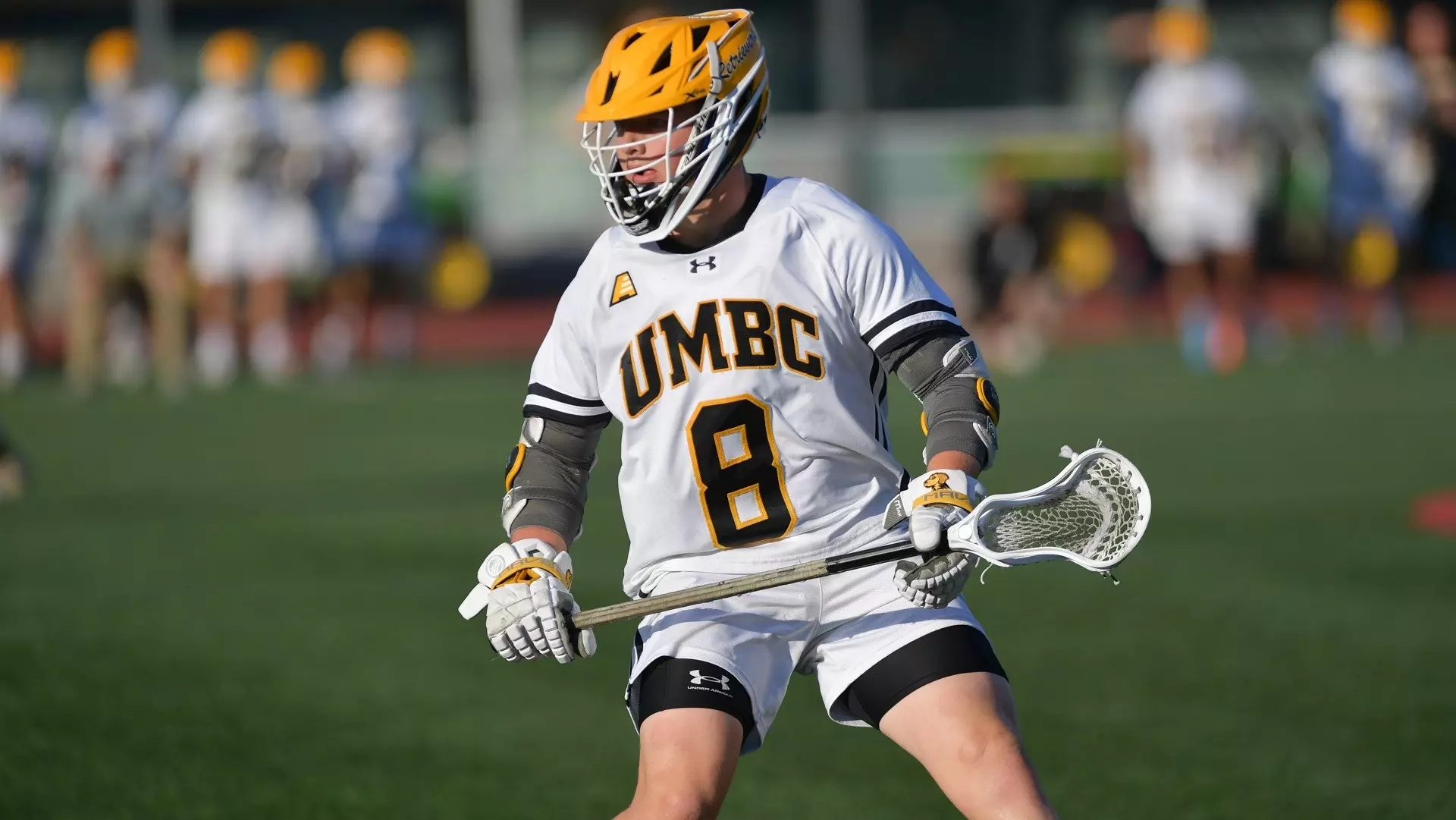
The climb back toward contention has not been easy for the UMBC Retrievers men’s lacrosse program, but the 2026 season showed signs that the foundation in Catonsville is beginning to stabilize again.
UMBC finished the year at 6-7 overall and battled through one of the tougher schedules in the America East Conference, facing programs like Towson Tigers, Loyola Greyhounds, and perennial conference contender UAlbany Great Danes. While the overall record may not immediately jump off the page, there were noticeable improvements throughout the season, especially once conference play began.
The year opened with a difficult stretch that tested the Retrievers early. UMBC dropped its first two games to Drexel and Loyola Maryland before earning its first win of the season with a 7-4 road victory over Mount St. Mary’s. The early portion of the schedule also included losses to Towson and Hofstra, with several games decided by only one or two possessions.
Despite the uneven start, the Retrievers found momentum in April and became one of the hotter teams in the America East late in the year. A turning point came during an explosive 18-4 victory over UMass Lowell, where UMBC produced one of its best offensive performances in years. The Retrievers scored 13 goals in the first half, marking the program’s highest-scoring half since 2015.
Offensively, the Retrievers were led by one of the conference’s breakout stars in Ryan Demato. The attackman became one of the most productive players in the America East, finishing among the league leaders with 20 goals and 27 total points in conference play. Demato also ranked near the top of the conference in shots per game, showing his ability to consistently pressure opposing defenses.
Connor Chick also emerged as a major contributor for UMBC, finishing conference play with 11 goals and seven assists. His versatility and ability to facilitate the offense gave the Retrievers another reliable option alongside Demato.
Statistically, UMBC’s offense showed clear improvement as the season progressed. The Retrievers finished the year with 126 goals and 70 assists while averaging nearly 40 shots per game. The team shot 24.6 percent overall and generated 268 shots on goal during the season.
The biggest issue for UMBC throughout the year came defensively, where consistency proved difficult against stronger opponents. The Retrievers allowed 132 goals on the season and struggled at times in transition defense and man-down situations. Opponents converted 13 extra-man goals against UMBC, while the Retrievers finished 7-for-23 on man-up opportunities offensively.
Still, the season cannot be viewed entirely through wins and losses alone. UMBC remained competitive in the America East race and once again qualified for the conference postseason. That alone represented progress for a roster that entered the season with plenty of questions and youth throughout key positions.
The Retrievers eventually saw their season end in the America East semifinals against top-seeded UAlbany, falling 14-3 in a difficult road matchup. UAlbany’s defense held UMBC scoreless through the first half and limited the Retrievers to their lowest offensive output of the season.
Even with the lopsided semifinal loss, there are encouraging pieces moving forward for interim head coach Craig Chick and the program. UMBC proved it could compete offensively within the conference, and several younger contributors gained meaningful experience against high-level competition.
The roster also continues to feature strong Maryland ties, something that has long been a staple of the program. Players from schools such as Mount St. Joseph, St. John’s College, and other local programs continue to form the backbone of the Retrievers roster.
Looking ahead, the next step for UMBC will be finding more consistency week to week. The flashes were there in 2026. The offense showed it can score in bunches, the team responded well after adversity during conference play, and several players established themselves as legitimate all-conference caliber contributors.
Now the challenge becomes turning those flashes into sustained success.
For a program trying to climb back into the upper tier of the America East, 2026 may ultimately be remembered less for the final record and more for the signs of progress that began to emerge as the season unfolded.